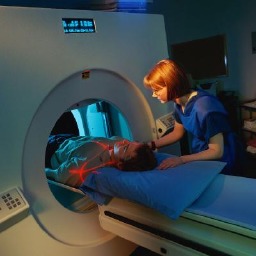
Brain Surgery Offers New Hope for Many with OCD
For a small percentage of people with obsessive compulsive disorder, medication (such as SSRI and TCA antidepressants) and behavioral therapy are unable to offer any major help. This form of OCD is called treatment refractory OCD, which is sometimes called treatment resistant OCD.
A viable alternative for these patients is psychosurgery (a.k.a. brain surgery). One must remember that there are many options before psychosurgery, and most people respond to medication or behavioral therapy. In other words, just because one medication won't work doesn't make someone treatment refractory.
OCD Surgery History
Psychosurgery can be a controversial treatment as it essentially involves destruction of a small part of the brain. Part of the controversy of course stems from the now discredited prefrontal lobotomy procedure and other surgical procedures that took place from the mid 1930s to the 1950s. These procedures were overzealously performed at the time on "disorders" such as schizophrenia, homosexuality, depression, developmental childhood disorders, criminals, etc. A prefrontal lobotomy is a surgical procedure in which the frontal lobes of the brain are irreversibly severed. This procedure was discredited because of limited effectiveness, and very common and severe side effects such as death, personality change, intellectual impairment, lack of emotional responsiveness, paralysis, etc. The doctor, named Moniz, who discovered prefrontal lobotomies — sadly received a Nobel Prize — making it a good case study for anyone who believes that modern medicine has all the answers.
Modern medicine and psychiatry are much different today than in years past, with many more safeguards in place to prevent such travesties (although, perhaps the doctors who performed prefrontal lobotomies at the time believed such things too). The danger with extreme, and new treatments always remains though, no matter the level of prevention used.
The nueroanatomy of OCD is becoming increasingly better understood (there is however much more to learn). Through brain imaging studies doctors can see brain activity, lending evidence to which parts of the brain are affected in patients with OCD. The evidence seems towards the limbic system and its connection with the basal ganglia.
OCD Surgery Options
The most commonly used psychosurgical treatments for OCD in the United States involve the use of radio-frequency waves to destroy a small amount of brain tissue, which disrupts a specific circuit in the brain that has been implicated in OCD. This area is the corticostriatal circuit, and it is comprised of the orbitofrontal cortex, the caudate nucleus, the pallidum, the thalamus, and the anterior cingulate cortex.
Surgical techniques for this purpose include:
- Anterior cingulotomy
- Capsulotomy
- Limbic leukotomy
These are generally safe procedures that do not usually effect a patient's memory or intellect. Cingulotomy, capsulotomy, and limbic leucotomy all appear to be equally effective, with cingulotomies believed to be the safest. Long-term outcomes of these procedures appear to be somewhere between 25 and 70 percent effective (depending on how strict the criteria) in alleviating the symptoms of treatment refractory OCD.
Other less permanent brain-based techniques include:
- Vagus nerve stimulation
- Deep brain stimulation
- Transcranial magnetic stimulation
Remember — psychosurgery is brain surgery. Typically doctors will refuse to operate unless the patient has failed several lengthy attempts at medication (at the full dosage) with augmentation and many months of intensive cognitive-behavioral therapy. Psychosurgery should be considered as a last resort — but it should be considered as an option if nothing else is working.
For information about non-surgical intensive treatment options for resistant OCD, visit the Center for the Treatment and Study of Anxiety.
Article written by M. Jahn & M. Williams, Ph.D.